
Energy efficiency and air conditioning for small business have become closely connected as utility costs continue to rise and customers expect comfortable indoor environments. Whether you operate a retail store, office, restaurant, salon, or small warehouse, air conditioning is often one of the largest contributors to monthly energy expenses. While maintaining a pleasant temperature is essential for employee productivity and customer satisfaction, inefficient cooling systems can significantly increase operating costs.
Many small business owners assume that reducing energy consumption means sacrificing comfort. In reality, the opposite is often true. Modern energy-efficient HVAC solutions can improve indoor comfort while lowering electricity bills. From selecting the right air conditioning system to implementing smart maintenance practices, there are numerous ways to maximize efficiency without compromising performance.
This guide covers everything small business owners need to know about optimizing air conditioning systems, reducing energy waste, and creating a more cost-effective workspace.
Why Energy Efficiency Matters for Small Businesses
Energy costs represent a significant portion of operating expenses for many businesses. When an air conditioning system runs inefficiently, it consumes more electricity than necessary, increasing utility bills month after month.
Improving efficiency offers several important benefits:
- Lower monthly energy expenses
- Reduced equipment wear and tear
- Improved indoor comfort
- Better employee productivity
- Enhanced customer experience
- Reduced environmental impact
- Longer HVAC system lifespan
For small businesses operating on tight margins, even a modest reduction in electricity consumption can create meaningful annual savings. These savings can then be invested in growth, marketing, staffing, or other operational improvements.
Energy-efficient cooling also supports sustainability initiatives. Many customers increasingly prefer businesses that demonstrate environmental responsibility, making efficiency improvements beneficial from both financial and branding perspectives.
Choosing the Right Air Conditioning System
One of the most important decisions a small business owner can make is selecting an appropriately sized and efficient air conditioning system.
Many businesses operate with systems that are either too large or too small for their space. Oversized units cycle on and off frequently, wasting energy and causing uneven temperatures. Undersized units struggle to maintain comfort and often run continuously.
When evaluating a new system, consider the following factors:
Building Size and Layout
The square footage of your business significantly impacts cooling requirements. Open floor plans, multiple rooms, high ceilings, and large windows all affect system performance.
Energy Efficiency Ratings
Look for systems with high efficiency ratings. Modern units are designed to deliver greater cooling capacity while consuming less electricity than older models.
Business Type
Different businesses have different cooling needs. Restaurants generate substantial heat from cooking equipment, while offices often require consistent cooling due to computers and electronics.
Climate Conditions
Businesses located in warmer regions generally require more robust cooling solutions compared to those in moderate climates.
Working with qualified HVAC professionals can help determine the best solution based on your specific operational requirements.
Smart Thermostats and Automation Technologies
Technology has transformed how businesses manage indoor climate control. Smart thermostats and automated building controls can significantly improve HVAC efficiency.
Traditional thermostats often rely on manual adjustments, which can lead to unnecessary energy use. Smart systems provide greater control and flexibility.
Benefits include:
- Automated scheduling
- Remote temperature management
- Occupancy-based adjustments
- Energy usage tracking
- Real-time performance monitoring
For example, a business can automatically reduce cooling during non-operating hours and restore comfortable temperatures before employees arrive. This simple adjustment can result in substantial annual energy savings.
Some advanced systems even analyze weather conditions and occupancy patterns to optimize performance automatically.
The initial investment in smart controls is often recovered through reduced energy expenses within a relatively short period.
Maintenance Practices That Improve Efficiency
Even the most advanced air conditioning system cannot perform efficiently without regular maintenance.
Neglected HVAC systems gradually lose efficiency due to dirt accumulation, worn components, and airflow restrictions. Routine maintenance ensures optimal performance throughout the year.
Key maintenance tasks include:
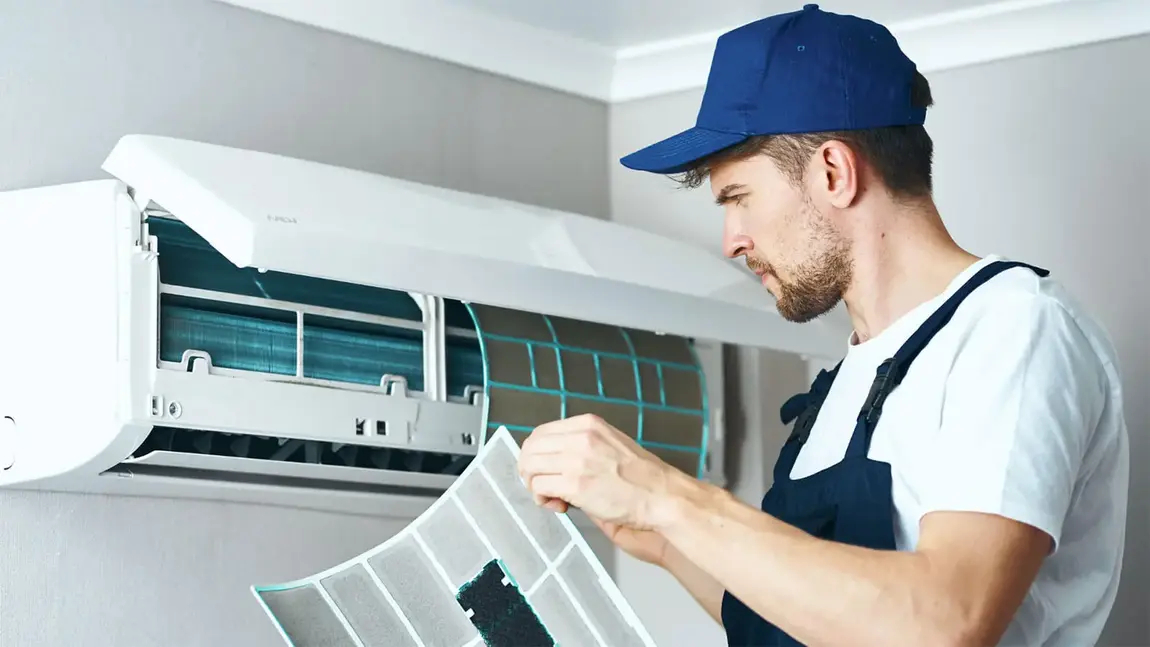
Replacing Air Filters
Dirty filters restrict airflow, forcing the system to work harder. Depending on usage levels, filters should be inspected regularly and replaced as needed.
Cleaning Coils
Evaporator and condenser coils collect dust and debris over time. Clean coils improve heat transfer and reduce energy consumption.
Inspecting Refrigerant Levels
Low refrigerant levels can reduce cooling performance and increase energy usage. Professional inspections help identify leaks and maintain proper operation.
Checking Ductwork
Leaks in air ducts can waste a significant amount of conditioned air. Sealing duct leaks improves system efficiency and temperature consistency.
Scheduling Professional Inspections
Annual or semi-annual HVAC inspections allow technicians to identify potential issues before they become costly repairs.
Preventive maintenance is generally far less expensive than emergency repairs and system replacements.
Improving Building Efficiency to Reduce Cooling Demand
An efficient air conditioning system works best when paired with an energy-efficient building.
Many businesses focus solely on HVAC equipment while overlooking building-related factors that influence cooling demand.
Upgrade Insulation
Proper insulation helps maintain indoor temperatures and reduces the workload on air conditioning systems.
Seal Air Leaks
Gaps around doors, windows, and utility penetrations allow cooled air to escape. Sealing these openings improves temperature control.
Install Energy-Efficient Windows
Modern windows reduce heat transfer and minimize solar heat gain, especially in sunny climates.
Use Window Treatments
Blinds, shades, and reflective films can reduce indoor heat buildup during peak sunlight hours.
Optimize Lighting
Traditional lighting systems generate heat. Switching to LED lighting reduces both electricity consumption and cooling requirements.
These improvements work together to create a more efficient environment, allowing HVAC systems to operate with less effort.
Strategies to Lower Cooling Costs Year-Round
Reducing air conditioning expenses requires a comprehensive approach rather than relying on a single solution.
Small businesses can achieve meaningful savings by implementing multiple efficiency strategies simultaneously.
Some practical methods include:
- Setting reasonable thermostat temperatures
- Keeping doors closed when possible
- Using ceiling fans to improve air circulation
- Scheduling maintenance consistently
- Upgrading aging equipment
- Monitoring utility bills regularly
- Educating employees about energy-saving practices
Employee awareness can have a surprisingly large impact. Simple actions such as keeping exterior doors closed and reporting temperature issues promptly can contribute to lower energy consumption.
Businesses should also review utility usage trends throughout the year. Identifying unusual spikes may reveal hidden equipment problems before they become major expenses.
Over time, these small adjustments can collectively produce significant financial benefits.
Final Thought
Energy efficiency and air conditioning for small business are not just operational concerns—they are strategic investments that directly affect profitability, comfort, and sustainability. Rising energy costs make efficient cooling systems more important than ever, especially for businesses seeking long-term financial stability.
By selecting the right HVAC equipment, implementing smart controls, maintaining systems properly, and improving building efficiency, small businesses can substantially reduce energy consumption while maintaining a comfortable environment for employees and customers.
The most successful approach combines technology, maintenance, and operational best practices. Rather than viewing energy efficiency as an expense, business owners should see it as an opportunity to lower costs, improve performance, and strengthen their competitive position.
With careful planning and consistent attention to efficiency, small businesses can enjoy reliable cooling, reduced operating expenses, and a more sustainable future.
FAQs
How much energy does air conditioning typically use in a small business?
Air conditioning often accounts for 30% to 50% of a small business’s electricity consumption, depending on climate, building design, and operating hours.
What is the most energy-efficient air conditioning option for small businesses?
High-efficiency HVAC systems with advanced compressors, variable-speed technology, and smart thermostat integration are generally among the most efficient options available.
How often should a business service its air conditioning system?
Most HVAC professionals recommend professional maintenance at least once or twice per year, along with regular filter inspections and replacements.
Do smart thermostats really save money?
Yes. Smart thermostats can reduce unnecessary cooling and optimize scheduling, often resulting in noticeable reductions in monthly energy bills.
Is replacing an old air conditioner worth the investment?
In many cases, yes. Older systems are typically less efficient than modern units. The energy savings from a new system can help offset the replacement cost over time.
How can employees help improve energy efficiency?
Employees can contribute by keeping doors and windows closed, reporting HVAC issues promptly, following thermostat policies, and using equipment responsibly.
What building improvements help reduce cooling costs?
Improved insulation, sealed air leaks, energy-efficient windows, LED lighting, and effective window coverings can all reduce cooling demand and improve overall efficiency.
